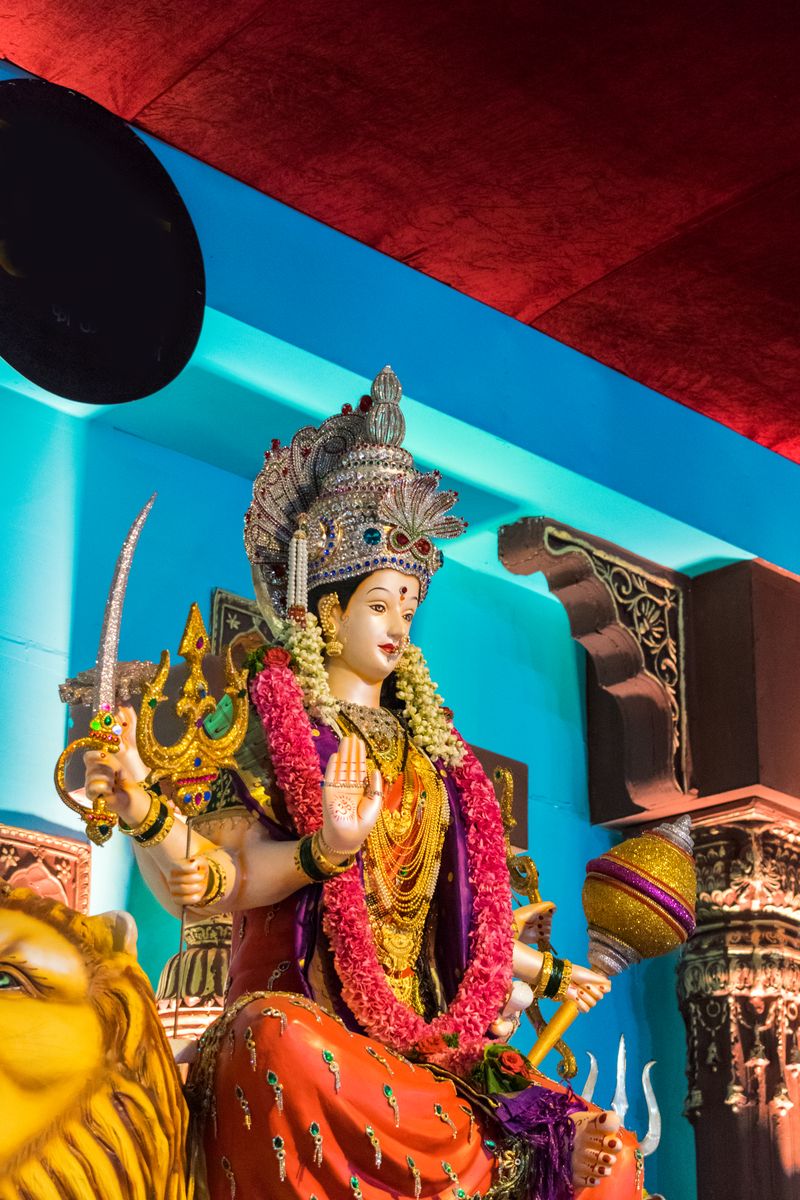
Imagine stepping into your home on Ghatasthapana morning—the day when millions of devotees across India plant sacred barley seeds in clay pots, welcoming Goddess Durga into their homes for nine nights of divine worship. This ancient ritual, performed at the very beginning of Navratri, isn't just a ceremony; it's your spiritual invitation to the most powerful feminine energy in the universe.
Ghatasthapana (literally "placing the pot") marks the official start of Navratri celebrations and sets the sacred tone for your nine-night journey of devotion. Whether you're a seasoned practitioner or approaching this ritual for the first time, this complete guide will help you perform the puja with authenticity and reverence.
What You Need (Puja Samagri)
Before you begin, gather these essential items:
- Clay pot or earthen vessel [Mitti ka Ghata] — preferably with a hole in the bottom for drainage
- Fresh garden soil or fertile earth [Bhumi]
- Barley seeds [Jau] — about a handful
- Rice grains [Chawal] — for offerings
- Sandalwood paste [Chandan] — for tilak markings
- Marigold flowers and jasmine [Phool] — for decorating the pot
- Incense sticks [Agarbatti] — preferably rose or sandalwood
- Diya with ghee [Deepak] — for the lamp
- Fresh water [Jal]
- Besan and jaggery offerings [Besan aur Gur]
- Red cloth or decoration [Laal Kapad]
- Kalash (sacred copper pot) for holding water if performing with full ritual
Step-by-Step Puja Vidhi
Step 1: Choose an auspicious location in your home—ideally the pooja room, kitchen, or northeast corner. Cleanse the area thoroughly with water and sprinkle it with rose petals.
Step 2: Fill your earthen pot with fertile garden soil up to three-quarters of its capacity. Ensure the soil is fresh and free from insects or impurities.
Step 3: Light your Diya (lamp) and offer prayers to Lord Ganesha, requesting his blessings for the successful completion of the puja. Bow and chant: "Om Gam Ganapataye Namah."
Step 4: Sprinkle water gently over the soil in the pot. The soil should be moist but not waterlogged—imagine it like the monsoon-touched earth.
Step 5: Soak your barley seeds in water for 2-3 hours before the puja, or use freshly soaked seeds. This increases germination.
Step 6: Plant the barley seeds carefully into the moist soil, distributing them evenly. Cover them lightly with a thin layer of soil. These seeds will grow into "Javaras" [barley sprouts] over nine days.
Step 7: Water the seeds gently so the soil absorbs moisture. Place the pot in a location that receives indirect sunlight—a window sill or corner of your pooja room works beautifully.
Step 8: Decorate the Ghata with marigold garlands, jasmine flowers, and a red cloth at the base. Apply sandalwood paste to mark it as sacred.
Step 9: Place incense sticks around the pot and light them, filling your space with fragrant smoke. This purifies the environment and invites divine presence.
Step 10: Recite the Devi Mahatmya or Durga Saptashati (hymns of Goddess Durga) or chant: "Om Jai Ambe Gauri, Maiya Shyama Gauri, Tanajaan Dak Har, Mangal Kari" three times.
Step 11: Offer rice grains, flowers, and besan-gur (chickpea flour and jaggery) to the Ghata. This symbolizes welcoming the Goddess with food offerings.
Step 12: Leave the Diya burning for at least 15-20 minutes while you remain seated in meditation or silent prayer, setting your intentions for the nine days ahead.
Best Time (Shubh Muhurta)
Ghatasthapana must be performed on the first day of Navratri, which falls during the Chaitra Navratri (spring, March-April) or Sharad Navratri (autumn, September-October). The auspicious timing is typically in the early morning hours before sunrise, or within two hours of sunrise, depending on your region. Check your Panchang for the exact Tithi (lunar date) and Muhurta in your timezone. If you want to know the most precise auspicious moment, use our Muhurta Calculator to identify the exact minute for your location.
Significance and Benefits
This puja represents the cosmic principle of creation—the barley seeds you plant symbolize the seeds of new intentions and divine consciousness planted in the fertile ground of your heart. Over nine days, as the Javaras grow, your spiritual energy simultaneously blossoms.
Ghatasthapana connects you to the Prakriti (primordial feminine energy) aspect of Goddess Durga. By performing this ritual, you acknowledge your dependence on nature and invite her protective, nurturing, and transformative power into your life. The nine days that follow become a period of heightened spiritual receptivity when your prayers carry amplified power.
Practically, this puja cultivates discipline, patience, and mindfulness—you water the seeds daily, creating a nine-day spiritual routine that anchors your practice.
Common Mistakes to Avoid
- Neglecting daily watering: Your Javaras won't grow without consistent care. Water once daily—this mirrors your spiritual commitment.
- Using stale or damaged soil: Always use fresh, fertile earth for better seed germination and symbolic purity.
- Performing the puja at an inauspicious time: Verify your local Navratri date; performing on the wrong day weakens the ritual's spiritual resonance.
- Placing the pot in complete darkness: Barley seeds need some indirect light to grow properly and maintain their symbolic vitality.
- Neglecting intention-setting: Don't rush through the puja. Spend time clarifying what you wish to manifest during these nine nights.
FAQ
Q: What should I do with the Javaras after Navratri ends?
A: On Dussehra (the tenth day), you can distribute the Javaras to family members or offer them to a river or temple. Never throw them in trash; they carry blessed energy. Some families wear a small bunch behind the ear as a symbol of Goddess's blessings.
Q: Can I perform Ghatasthapana if I live in an apartment with limited sunlight?
A: Absolutely. While indirect natural light is ideal, Javaras can grow under artificial light as well. Place a small LED bulb near the pot for 6-8 hours daily. The ritual's spiritual power doesn't depend solely on sunlight—it depends on your devotion and consistent care.
Q: Is it necessary to perform Ghatasthapana puja every year?
A: Yes, this is an annual ritual performed at the beginning of each Navratri cycle. If you're new to the practice, starting this year is perfect. If you want deeper insight into your spiritual cycles and when you're in particularly receptive periods, consider generating your Vimshottari Dasha reading to understand your current planetary period.
Your journey through Navratri begins the moment you place that first seed into sacred soil—a humble gesture that connects you to millennia of devotees and to the infinite creative power of the Divine Mother herself.
Comments
🔮 Join the conversation — share your thoughts on this article
Login to Comment →