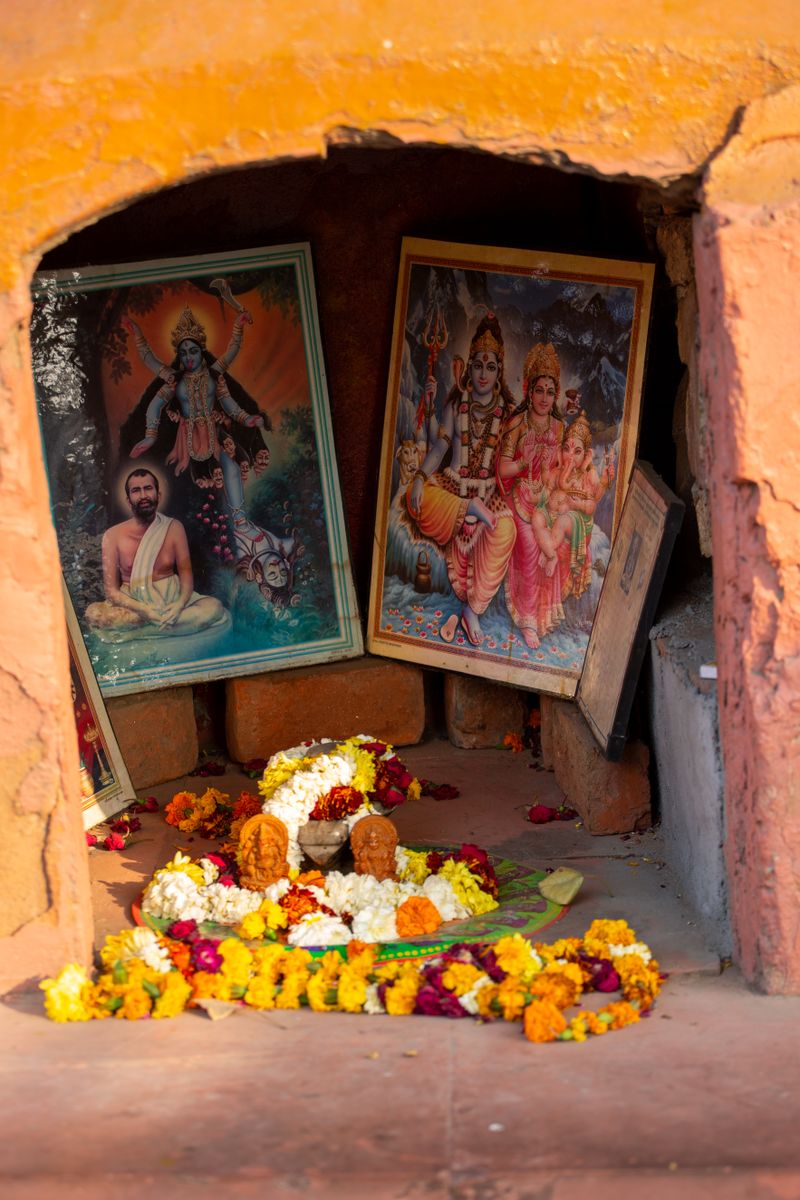
When you pour sacred water over the Shivling while chanting the Rudra Mantra, something shifts—the veil between your ordinary mind and infinite grace grows thin. Rudrabhishek is one of the most powerful Shiva rituals, where 16 ritualistic offerings [Shodasopchar Puja] purify your consciousness and align you with Lord Shiva's cosmic energy. Whether you're seeking relief from Saturn's challenging influence or simply yearning for spiritual transformation, this ancient practice remains unchanged for thousands of years.
What You Need (Puja Samagri)
- Water [Jal] — preferably from a sacred source or Ganges water
- Milk [Dugdh] — symbolizing purity and nourishment
- Yoghurt [Dahi] — representing sweetness and devotion
- Honey [Madhu] — invoking divine sweetness
- Ghee [Ghrit] — clarified butter for offerings
- Flowers [Phool] — fresh lotus, jasmine, or marigold; Shiva loves white flowers
- Rudraksha beads [Rudraksha Mala] — for chanting (108 beads ideal)
- Bilva leaves [Bilva Patra] — sacred to Shiva; three leaves per offering
- Incense sticks [Agarbatti] — preferably sandalwood or Nag Champa
- Oil lamp [Diya] — ghee lamp for aarti
- Vibhuti or sacred ash [Bhasma] — for final tilak
- Copper or silver vessel [Kalash] — for holding sacred liquids
- Bell [Ghanti] — to invoke divine presence
Step-by-Step Puja Vidhi
-
Purify your space and yourself — Bathe, wear clean white or light-colored clothing, and sprinkle water around your puja area. Ring the bell three times to invoke auspiciousness and ward off negative energy.
-
Install the Shivling — Place the Shivling on a raised platform facing east. Arrange flowers and bilva leaves nearby. If performing at a temple, follow the temple's protocols respectfully.
-
Light the lamp — Ignite the ghee lamp with devotion, saying: "Om Namah Shivaya." This represents removing ignorance through divine light.
-
Invoke Lord Shiva — Chant "Om Namah Shivaya" 21 times to establish your spiritual intention and invite Shiva's presence into your heart and the ritual space.
-
First offering: Water ablution [Jal Abhishek] — Pour cool water over the Shivling while chanting the Maha Mrityunjaya Mantra. This first upachar washes away impurities. Flow water gently and respectfully.
-
Second offering: Milk [Dugdh Abhishek] — Pour milk slowly, symbolizing purity entering your life. Chant: "Om Namah Shivaya" with each pour.
-
Third offering: Yoghurt [Dahi Abhishek] — Apply yoghurt to invoke divine love and family harmony in your household.
-
Fourth offering: Honey [Madhu Abhishek] — Anoint with honey, representing sweetness in speech and relationships. This offering balances the Vata dosha and brings peace.
-
Fifth offering: Ghee [Ghrit Abhishek] — Pour ghee while chanting the Rudra Mantra. This invokes radiance and removes karmic blockages—especially helpful if you're experiencing a challenging planetary period.
-
Sixth offering: Flowers [Phool Archana] — Scatter fresh flowers over the Shivling. Each petal carries your prayers toward the divine. Use white flowers when possible, as Shiva loves their purity.
-
Seventh offering: Bilva leaves [Bilva Patra Samarpan] — Place three bilva leaves (representing the three gunas or qualities of nature) on the Shivling. These are Shiva's favorite and carry tremendous spiritual potency.
-
Eighth offering: Incense [Dhup] — Light incense and circle it around the Shivling, filling the air with sacred fragrance. This offering purifies your environment and elevates consciousness.
-
Ninth through sixteenth offerings — Continue with Chandan (sandalwood paste), Naivedya (blessed food offering), Arghya (ritual water in cupped hands), Tambul (betel leaf), Aarti (circular flame offering), and final water rinse. Each offering should be accompanied by "Om Namah Shivaya" and sincere devotion.
-
Perform Aarti — Circle the lit lamp before the Shivling in clockwise motions, first with both hands, then offering it to devotees. Sing traditional Shiva aarti songs with full heart.
-
Apply sacred ash [Vibhuti Tilak] — Mark your forehead with three horizontal lines of vibhuti, symbolizing Shiva's presence within you and liberation from the cycle of rebirth.
-
Receive Prasad — Consume blessed food or water that touched the Shivling. This seals the ritual and brings Shiva's grace into your body and mind.
Best Time (Shubh Muhurta)
Rudrabhishek is most potent on Mondays [Somvar], the day sacred to Shiva. Perform it during Brahma Muhurta (4:00–6:00 AM) when cosmic energy flows most freely. The Pradosh Vrat (evening hours before sunset) is equally auspicious. Check your Panchang for today's tithi and nakshatra—perform Rudrabhishek during Shiva nakshatras like Mrigashira, Ardra, or Pushya for amplified results. If you're navigating Saturn's challenging 7.5-year cycle, use our Sade Sati Calculator to identify when you most need this ritual's protective grace.
Significance and Benefits
Each of the 16 offerings carries profound meaning. The water ablutions represent cleansing past karma; milk invokes mother-love's blessing; honey brings divine sweetness into relationships. Together, these 16 upachar create a complete vibrational frequency that resonates with Shiva's consciousness.
Regular Rudrabhishek practice dissolves negative karmic patterns, brings health and prosperity, protects your family, and accelerates spiritual growth. Many devotees report deep peace, clarity in decision-making, and relief from persistent challenges after sincere practice. If you're experiencing planetary difficulties reflected in your Daily Vedic Horoscope, Rudrabhishek acts as a powerful cosmic remedy.
Common Mistakes to Avoid
- Rushing through offerings — Each step deserves mindful attention; quality over speed always.
- Using wilted or artificial flowers — Shiva responds to fresh, natural beauty; artificial flowers create no spiritual resonance.
- Chanting without understanding — Learn the mantras' meanings; empty recitation lacks transformative power.
- Performing with anger or distraction — Your mental state matters as much as the ritual itself; approach with sincere devotion.
- Neglecting cleanliness — Both physical hygiene and mental purity are essential; bathe before the puja.
FAQ
Q: Can women perform Rudrabhishek?
A: Absolutely. Women are not only permitted but especially honored in Shiva worship. Menstruating women should follow their family's traditions, but many temples and scriptures welcome all sincere devotees. Your heartfelt devotion matters most.
Q: How often should I perform Rudrabhishek?
A: Ideal practice is every Monday, but even once monthly or quarterly brings significant benefits. If facing serious challenges, Generate Your Kundali to identify your birth chart's Shiva placements, then consult a qualified astrologer for personalized guidance.
Q: Can I perform this at home or only in temples?
A: Both are valid. Home Ru
Comments
🔮 Join the conversation — share your thoughts on this article
Login to Comment →