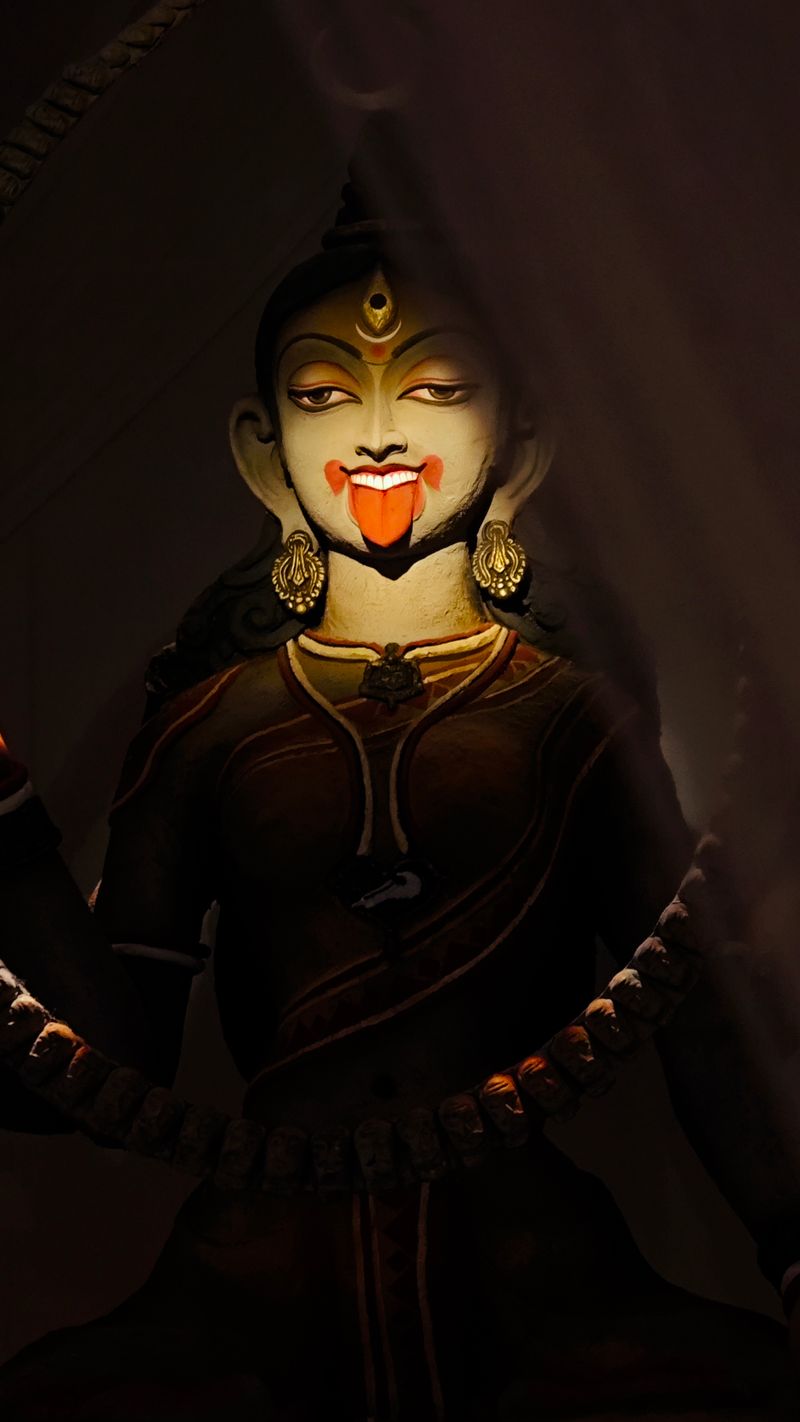
On Diwali night, while most households light lamps to Lakshmi, a powerful parallel worship unfolds in homes and temples across India: the fierce, protective rituals honoring Goddess Kali. This is no gentle evening prayer—it's an ancient, electrifying communion with the Divine Mother in her most transformative form, and performing Kali Puja on this auspicious night can dissolve obstacles, grant protection, and awaken dormant spiritual power within you.
What You Need (Puja Samagri)
- Red flowers (vermillion hibiscus preferred) — for Devi's warrior energy
- Black sesame seeds [Kala Til] — symbol of destruction of negativity
- Bilva leaves [Bilvapatra] — sacred to Kali worship
- Coconut [Nariyal] — whole, for offering
- Jaggery and rice [Gur and Chawal] — prasad ingredients
- Ghee [Ghrit] and oil for lamps [Diya]
- Incense sticks [Agarbatti] and camphor [Kapoor]
- Bell [Ghanta] — to invoke divine presence
- Red thread [Lal Dori] — for binding offerings
- Honey and milk [Madhu aur Ksheer] — cooling offerings for fierce Devi
- Sandalwood paste [Chandan] — cooling balm for the Divine Mother
- Your sincere intention and devotion — the most powerful ingredient
Step-by-Step Puja Vidhi
Step 1: Choose an auspicious time on Diwali night using the Muhurta Calculator to identify the most favorable hour for your worship. Evening twilight (Sandhya Kal) is traditionally ideal.
Step 2: Purify your puja space with water and sweep it clockwise. This isn't mere cleaning—you're spiritually preparing the ground for the Divine Mother's presence.
Step 3: Create a simple altar (Vedi) by placing a cloth in the northeastern corner. This direction aligns with spiritual awakening and Kali's transcendent nature.
Step 4: Invoke Ganesha first with a simple prayer: "O remover of obstacles, bless this worship." Light your lamp [Diya] to illuminate both the physical and spiritual realms.
Step 5: Sprinkle consecrated water around your puja space while mentally inviting Kali to accept your devotion. Use the bell to mark this sacred boundary.
Step 6: Place the Kalash (sacred water pot) at the center of your altar, symbolizing the cosmic womb from which all power emerges.
Step 7: Offer red flowers to the deity while chanting "Om Kali Kali Mahakal" or the traditional Kali Gayatri mantra. Each flower represents a layer of your ego dissolving.
Step 8: Present black sesame seeds as your primary offering—these embody the transformation of darkness into divine wisdom. Sprinkle them around the base of your altar.
Step 9: Pour milk and honey into a vessel and offer it to the Devi. The coolness of these offerings soothes her fierce nature and represents the cooling grace that follows destruction.
Step 10: Ring the bell loudly while circumambulating your altar three times clockwise. This awakens spiritual energy and honors the Devi's circular cosmic dance (Tandava).
Step 11: Offer the coconut, breaking it open to symbolize the cracking open of your hardened heart and limited ego.
Step 12: Conclude by prostrating fully before the altar, surrendering your will to the Divine Mother's infinite wisdom and protection.
Step 13: Distribute prasad (sanctified food offering) to family members, beginning with elders, to spread Kali's blessings.
Best Time (Shubh Muhurta)
Diwali night itself—specifically the new moon [Amavasya] night in the Hindu month of Kartik—is the supreme time for Kali Puja. Check your Panchang to confirm the exact tithi timing in your location. The hours just after sunset until midnight are traditionally most potent. If you know your birth chart, consulting your Daily Vedic Horoscope can reveal whether Kali's warrior energy is particularly activated for you on that specific night.
Significance and Benefits
Goddess Kali represents the fierce, liberating power that destroys ignorance, ego, and negative karma. When you worship her on Diwali—the festival of light triumphing over darkness—you're aligning with her dual nature: destroyer of obstacles and bestower of ultimate freedom.
The spiritual benefits include: liberation from fear, dissolution of karmic blocks, protection from harmful energies, awakening of dormant spiritual power, and deepening devotion to the Divine Mother. On a practical level, devotees report increased courage, clarity in decision-making, and remarkable synchronicities that resolve long-standing problems.
Common Mistakes to Avoid
- Approaching with fear rather than love: Kali isn't vengeful toward sincere devotees; she's supremely protective. Approach her as a mother, not a demon.
- Neglecting the closing rituals: Properly concluding your puja grounds the energy. Never abandon the altar abruptly.
- Using inappropriate flowers or offerings: Kali accepts what comes from a pure heart, but red flowers and black sesame are traditionally most aligned with her energy.
- Performing the puja in a distracted, rushed state: Quality of intention matters infinitely more than quantity of ritual items.
- Forgetting to share prasad: The blessing becomes complete only when distributed—this is how you extend Kali's grace to others.
FAQ
Q: Can women perform Kali Puja during menstruation?
A: Traditional texts have varying perspectives, but modern Vedic scholars increasingly emphasize that a woman's menstrual cycle doesn't diminish her spiritual purity or connection to the Divine Mother. If you feel called to worship, you may do so while maintaining basic cleanliness. Your sincere devotion matters most.
Q: What if I don't have all the recommended items?
A: Kali accepts the offerings of a humble heart above all else. If you lack specific items, substitute with whatever pure, natural elements you have—flowers, water, rice, or even a simple lamp. Your intention and devotion are the true samagri (materials).
Q: Is Kali Puja dangerous or advanced practice?
A: Not at all. Kali Puja performed with respect and pure intention is deeply protective, not dangerous. She's the Divine Mother in her fierce form, swiftly removing obstacles for sincere devotees. Beginning practitioners are absolutely welcome to perform this worship.
On Diwali night, as you light lamps and invite Lakshmi's abundance, remember that true prosperity flows from freedom—freedom from fear, limitation, and ignorance. By honoring Kali alongside Lakshmi, you welcome both wealth and wisdom, comfort and courage. Your worship tonight is an ancient conversation with the Divine Mother herself.
Comments
🔮 Join the conversation — share your thoughts on this article
Login to Comment →