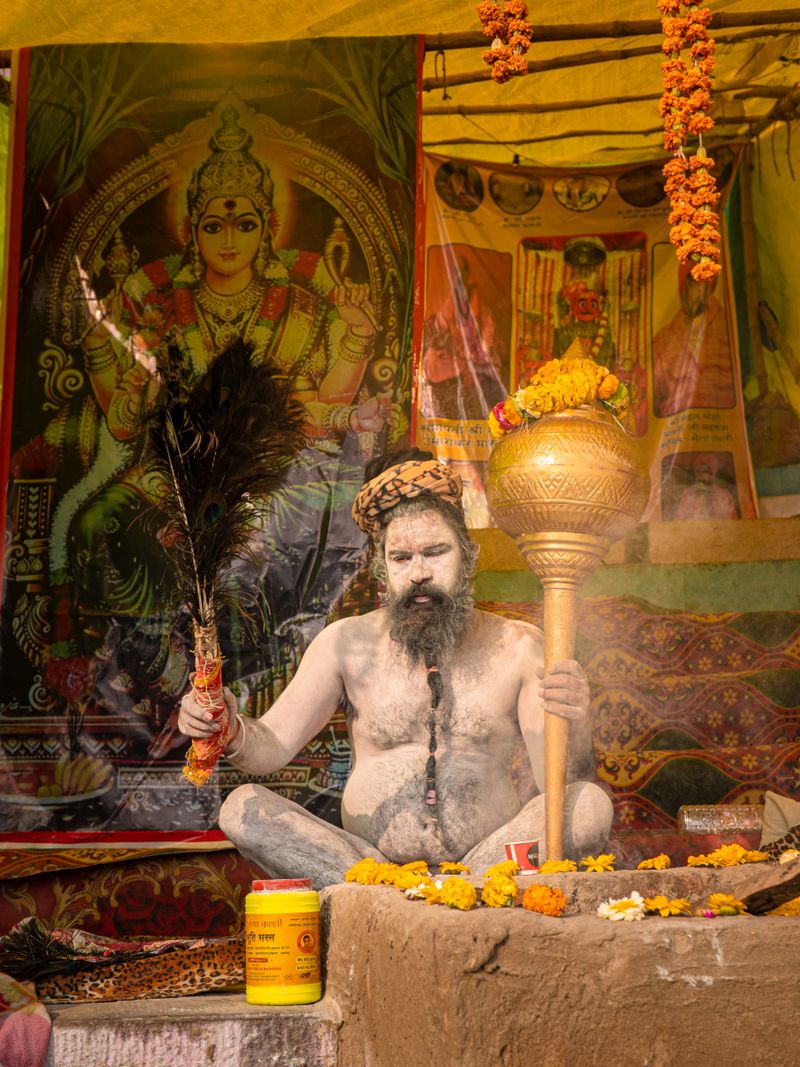
When the full moon rises on Guru Purnima, millions of devotees bow to their spiritual teachers with prayers and rituals that echo ancient wisdom. This sacred day celebrates not just human gurus, but the divine principle of guidance itself — the light that dispels ignorance. Whether you seek blessings from a living teacher or honour the eternal Guru within, this puja connects you to a lineage stretching back thousands of years.
What You Need (Puja Samagri)
Gather these items before you begin your Guru Purnima puja:
- Kalash (sacred copper pot) filled with water, topped with mango leaves and a coconut
- Chandan (sandalwood paste) for tilak (sacred mark)
- Pushpa (fresh flowers — yellow marigolds or white jasmine preferred)
- Dhoop (incense sticks or fragrant resin like frankincense)
- Diya (oil lamp with cotton wicks)
- Ghee (clarified butter) for the lamp
- Phal (fresh fruits — banana, apple, or coconut)
- Naivedya (food offering — khichdi, halwa, or milk pudding)
- Akshat (unbroken rice grains mixed with turmeric)
- Japa Mala (prayer beads — 108 beads for meditation)
- Parikrama Dori (thread for circumambulation around the altar)
- Guru Yantra (sacred diagram) or photograph of your Guru
- Prarthana Patra (written prayer or intention)
Step-by-Step Puja Vidhi
Step 1: Purify Your Space
Begin by sweeping and cleaning your puja room with water mixed with a few drops of rose water. Light incense or burn camphor to cleanse the atmosphere and invite divine energy.
Step 2: Create Your Altar
Place the Guru Yantra or photograph at the centre of your altar, facing east. Arrange the Kalash to the right, the diya to the left, and flowers in front. This creates a sacred geometric space for your worship.
Step 3: Seat Yourself Properly
Sit facing east or north in a crossed-leg position (Sukhasana or Padmasana). Wear clean, preferably yellow or white clothing. Light the diya first — this symbolises the removal of ignorance and the awakening of consciousness.
Step 4: Invoke Ganesha
Begin by offering flowers, incense, and a few grains of Akshat to Lord Ganesha with the mantra: "Om Gam Ganapataye Namaha." Ask for his blessings to remove obstacles from your spiritual path.
Step 5: Invoke the Guru Principle
Ring the bell three times to invite divine presence. Offer Chandan to the Guru image, applying a small tilak mark to your own forehead simultaneously. Chant: "Guru Brahma, Guru Vishnu, Guru Devo Maheshwara, Guru Sakshat Param Brahma, Tasmai Shri Gurave Namaha" — acknowledging the Guru as the embodiment of all divine principles.
Step 6: Make Floral Offerings
Slowly place flowers at the altar while meditating on the qualities of your Guru — wisdom, compassion, courage, and steadfastness. With each flower, silently thank them for a specific teaching or lesson they've given you.
Step 7: Perform Pushpanjali
Cup your hands with flowers and recite: "Om Namah Shivaya" or "Aum Mani Padme Hum" — whichever resonates with your tradition. Offer the flowers as a gesture of complete surrender and gratitude.
Step 8: Circumambulate the Altar
Walk slowly around your Guru image three times in a clockwise direction, holding the Parikrama Dori. This represents your commitment to following the Guru's teachings and walking the spiritual path.
Step 9: Meditate with Your Japa Mala
Sit quietly and use your prayer beads to chant the Guru mantra 108 times. If you wish to understand your spiritual path's timing better, you might consult your Vimshottari Dasha reading to see which planetary periods will support your Guru-bhakti (devotion to the Guru).
Step 10: Offer Naivedya
Present the food offering with both hands, saying: "Guru, please accept this humble offering of nourishment." The act of cooking and offering with intention transforms the food into blessed Prasad (sacred food).
Step 11: Perform Aarti
Move the diya in clockwise circles before the Guru image while singing traditional aarti songs or playing devotional music. This is the most joyful moment of worship, celebrating the light of knowledge.
Step 12: Distribute Prasad
Share the blessed food with family members and, if possible, with guests. This completes the sacred cycle of giving and receiving.
Best Time (Shubh Muhurta)
Guru Purnima falls on the Purnima tithi (full moon day) in the month of Jyeshtha or Ashadha (May–July). The most auspicious time to perform this puja is during Brahmi Muhurta — the last hour before sunrise — when the mind is naturally more receptive to spiritual energy.
However, if sunrise worship isn't possible, the puja is equally effective during the evening Pradosh Kaal (evening twilight). You can use the Muhurta Calculator to find the exact auspicious moment for your location, and check the Panchang for today's tithi and nakshatra alignment.
Significance and Benefits
The Guru represents the bridge between your individual consciousness and universal consciousness. In Hindu philosophy, "Guru" literally means one who removes darkness — gu (darkness) and ru (light). When you perform this puja with sincerity, you're not worshipping a person, but honouring the eternal principle of wisdom that flows through all enlightened beings.
The benefits are both spiritual and practical. Devotees report deepened intuition, clarity in decision-making, and protection from negative influences. Your Daily Vedic Horoscope may show planetary positions that affect your learning capacity; Guru Purnima puja strengthens your ability to absorb and integrate wisdom regardless of astrological transits.
On a deeper level, this puja awakens the dormant Guru principle within yourself — your inner voice of wisdom that guides you toward your true purpose (dharma).
Common Mistakes to Avoid
- Performing the puja mechanically without devotion — the Guru responds to sincerity, not mere ritual perfection
- Skipping the meditation step — this is where the real transformation happens; don't rush through it
- Using wilted or artificial flowers — fresh, vibrant flowers carry better energy and show respect
- Forgetting to express gratitude specifically — vague thanks carry less power; mention actual lessons learned
- Neglecting to share Prasad with others — the blessing multiplies when shared generously
FAQ
Q: Can I perform this puja without a living Guru?
A: Absolutely. Guru Purnima honours the principle of Guruhood itself. You can worship Lord Dakshinamurti (the cosmic Guru), Lord Shiva, or a deity from your tradition. The universe itself is your ultimate Guru, eternally teaching through experience. If you have a Guru, however, their presence — even as a photograph — amplifies the puja's power.
Q: What if I miss the exact Purnima date?
A: While Guru Purnima is traditionally observed on the full moon, your sincere worship within a day or two of the tithi still carries full benefits. The divine principle of Guruhood doesn't abandon you for missing a calendar date — your intention matters more than perfect timing.
Q: Should I perform this puja alone or with others?
A: Both are powerful. Solo practice deepens your personal connection with your Guru's teachings. Group worship amplifies the collective energy and creates a Satsang (spiritual
Comments
🔮 Join the conversation — share your thoughts on this article
Login to Comment →