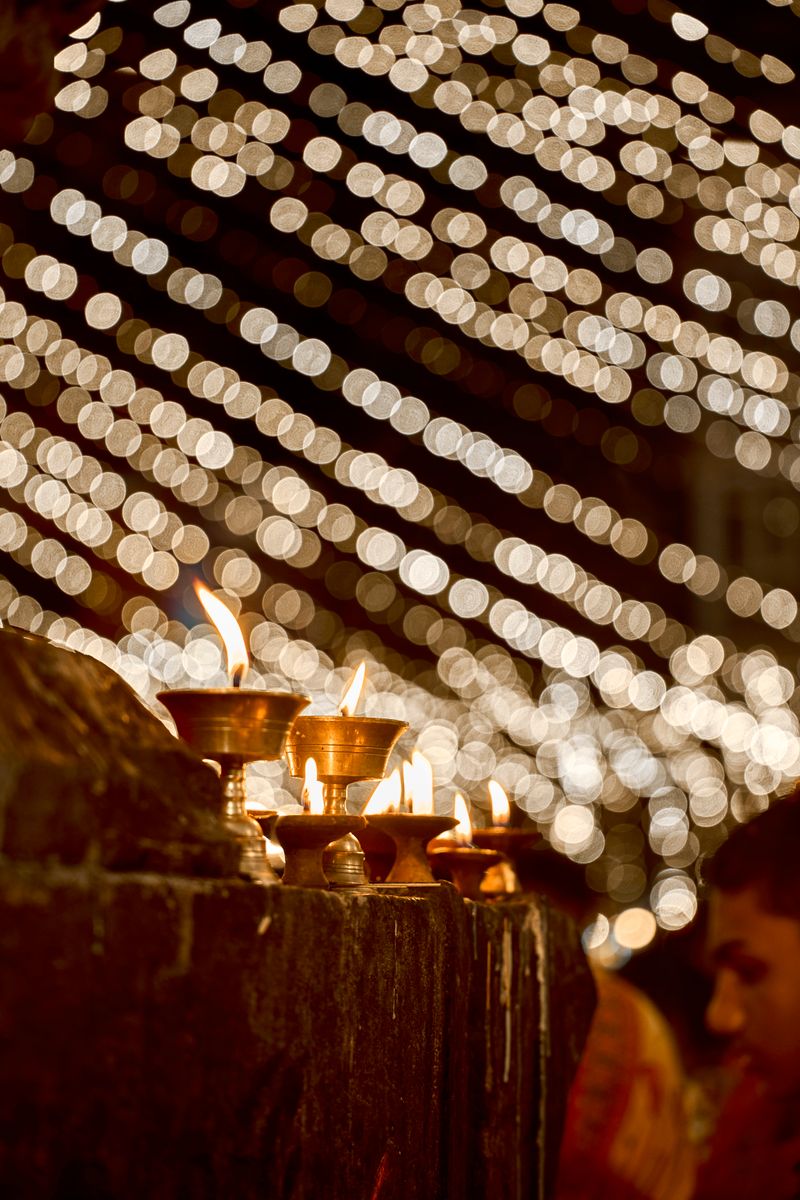
On the darkest night of the year, millions light diyas not just for decoration, but to invite divine abundance into their homes. Lakshmi Puja during Diwali is the most sacred ritual of the year for Hindu devotees—a ceremony so powerful that it's believed to align your entire household with prosperity and spiritual grace. This complete guide will walk you through every step, ensuring your puja resonates deeply with the Goddess of Wealth and brings blessings to your family for the year ahead.
What You Need (Puja Samagri)
Before you begin, gather these essential items at your worship space:
- Lakshmi idol or photograph [Murti/Chitra]
- Oil lamps [Diya] — preferably clay, filled with ghee or mustard oil
- Incense sticks [Agarbatti] — rose or sandalwood
- Flowers — marigold, jasmine, and rose petals [Pushpa]
- Betel leaves and nuts [Paan-Supari]
- Sweets and dry fruits — specifically kheer, halwa, and cashews [Mithai]
- Coins and currency notes [Dhan] — to offer symbolically
- Copper or brass pot [Kalash] — filled with water and mango leaves
- Vermillion powder [Kumkum] and sandalwood paste [Chandan]
- Camphor [Kapur] for aarti
- Bell [Ghanti] — for invoking divine presence
- Turmeric powder [Haldi]
- Sesame oil [Til-Tel] for anointing
Step-by-Step Puja Vidhi
Step 1: Prepare Your Sacred Space
Begin by cleaning your puja area thoroughly. Sprinkle water mixed with turmeric around the worship space. This purifies not just the physical space but creates an energetic boundary for your ritual. Spread a clean white or yellow cloth on the ground or altar where you'll place the Lakshmi idol.
Step 2: Create the Kalash (Sacred Pot)
Place the copper pot [Kalash] filled with water and mango leaves at the center of your altar. This represents abundance and the cosmic womb from which all prosperity flows. Tie a red or yellow thread around its base to seal the sacred intention.
Step 3: Install the Lakshmi Murti
Position the Lakshmi idol or image in front of the Kalash, facing east or north. Some families prefer to place two idols—Lakshmi and Ganesha—with Ganesha to the left of Lakshmi, as he removes obstacles to wealth. If using a photograph, place it in an ornamental frame.
Step 4: Light the Diya (Oil Lamps)
Light the main diya in front of Lakshmi using ghee and a cotton wick [Batti]. Light additional diyas around your home—at the entrance, in each room, and near windows. Each flame represents enlightenment dispersing darkness and ignorance.
Step 5: Invoke Ganesha (Ganesh Puja)
Begin by ringing the bell three times. Offer flowers and sandalwood paste to Ganesha, chanting: "Om Gam Ganapataye Namaha" (three times). This removes obstacles and prepares the path for Lakshmi's blessings. Offer betel leaves, dry fruits, and a sweet to Ganesha.
Step 6: Chant Lakshmi Invocation
Ring the bell and offer flowers to Lakshmi while chanting: "Om Shreem Mahalakshmyai Namaha" (108 times, or at least 21 times). This powerful mantra awakens the Goddess's energy and opens her blessings toward your household. You can use a mala [prayer beads] to count accurately.
Step 7: Offer Flowers and Sandalwood
Gently place flower petals at Lakshmi's feet or image. Apply sandalwood paste (mixed with a drop of sesame oil) on the idol's forehead and chest. This gesture represents honoring the divine with your heart's devotion—not mere external ritual.
Step 8: Present the Offering of Wealth
Place coins, currency notes, and your account documents or business papers in front of Lakshmi. This symbolizes dedicating your material wealth and resources to divine guidance, ensuring they're used wisely and ethically. Many families also place their ornaments here temporarily for blessings.
Step 9: Offer Sweets and Food
Present the prepared sweets, kheer, halwa, and dry fruits [Naivedya] to Lakshmi. These offerings aren't bribes—they're expressions of gratitude and faith. Chant: "Annam Brahma, Raso Vishnuh, Pakta Rudrah Savabhavah" (Food is Brahma, taste is Vishnu, the cook is Rudra).
Step 10: Perform Aarti (Circumambulation of Light)
Ring the bell rhythmically and perform aarti by circling the camphor flame in front of Lakshmi in a clockwise direction, three to five times. The Sanskrit term Aarti [Arati] means "removal of darkness." As you do this, chant the Lakshmi Aarti: "Om Jai Lakshmi Mata, Maiya Teri Puja Kar Har Vara Pata..." This is the most powerful moment—when your individual consciousness meets the divine.
Step 11: Seek Blessings
Bow with your forehead touching the ground in complete surrender [Shashtanga Namaskara]. Mentally or verbally express your intentions—not just for wealth, but for wisdom to use prosperity righteously. Include prayers for your family's health, unity, and spiritual growth.
Step 12: Distribute Prasad (Blessed Food)
Offer the blessed food [Prasad] to family members, starting with elders. This sanctified food carries Lakshmi's blessings and should be consumed with reverence. Even if you have guests, ensure everyone receives prasad—sharing multiplies the blessing.
Step 13: Maintain the Ritual Space
Keep the diyas lit throughout the evening and night. If possible, let them burn completely—never extinguish them by blowing. When the puja concludes, leave the flowers and offerings undisturbed until the next morning, then immerse them in flowing water.
Best Time (Shubh Muhurta)
Diwali Lakshmi Puja is performed on Amavasya Tithi (New Moon) during Kartik month, which typically falls between October and November in the Gregorian calendar. However, the exact muhurta [auspicious time] varies yearly based on your geographic location.
Most traditionally, the puja begins during Pradosh Kaal (sunset time), which lasts approximately 48 minutes after sunset. This is considered the most powerful window for invoking Lakshmi. Check your Panchang or use our Muhurta Calculator to find the precise timing for your city.
Additionally, if you know your birth chart through your Generate Your Kundali, you can identify your personal wealth-giving planets (Jupiter for abundance, Venus for material prosperity). Performing puja during their favorable periods amplifies benefits exponentially. Some families also check their Vimshottari Dasha to understand current planetary periods and adjust their intentions accordingly.
Significance and Benefits
Lakshmi Puja isn't merely about requesting money—it's about recognizing and honoring the divine principle of abundance that flows through the universe. Lakshmi represents not just financial wealth [Dhan] but also inner richness [Sampada], good health [Arogya], knowledge [Vidya], courage [Shakti], and wisdom [Buddhi].
When you perform this ritual with genuine devotion, you achieve several transformations. First, you reprogram your subconscious mind to attract prosperity through aligned thinking and action. Second, you cultivate gratitude—acknowledging the abundance already present in your life. Third, you invite cosmic energies to support your ethical pursuits.
Spiritually, Lakshmi Puja elevates your consciousness during a significant astronomical moment (the new moon is associated with new beginnings and inner reflection).
Comments
🔮 Join the conversation — share your thoughts on this article
Login to Comment →