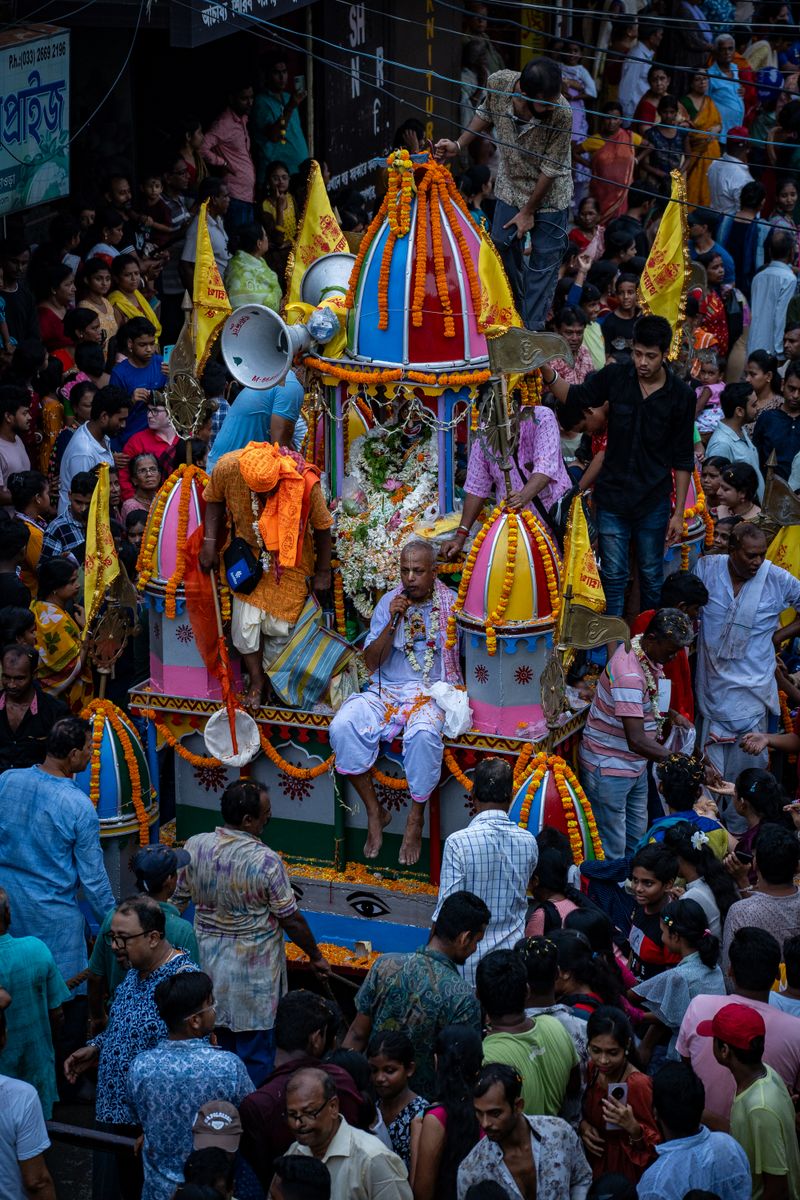
Imagine millions of devotees gathering to pull a towering wooden chariot carrying the Lord of the Universe—this is Rath Yatra, one of Hinduism's most electrifying spiritual events. Celebrated in the coastal temple of Lord Jagannath in Puri, Odisha, this ancient festival transforms the deity into a moving temple that journeys through the city streets. Whether you're planning to witness this sacred spectacle or perform the puja at home, understanding the proper Rath Yatra Puja Vidhi [ritual procedures] will deepen your spiritual connection to Lord Jagannath.
What You Need (Puja Samagri)
- Flowers [pushpa] — marigold, lotus, and jasmine garlands
- Incense sticks [agarbatti] — sandalwood or rose-scented varieties
- Oil lamps [diya] — traditionally ghee-filled clay lamps
- Coconut [nariyal] — whole and unbroken
- Turmeric powder [haldi] — for ritual marking and purification
- Red vermillion [sindoor] — sacred red powder for blessings
- Rice grains [chawal] — uncooked basmati rice
- Besan sweet offering [puas] — chickpea flour traditional sweets
- Milk and yoghurt [dahi] — for bathing the deity symbolically
- Sandalwood paste [chandan] — cooling and sacred fragrance
- Bell [ghanti] — metal bell for calling divine presence
- Conch shell [shankh] — for sacred sound vibrations
Step-by-Step Puja Vidhi
-
Purify yourself and your space — Begin by taking a ritual bath and wearing clean white or yellow clothes. Sprinkle water mixed with turmeric around your puja altar to create sacred space [sankalpa].
-
Invoke Ganesha — Light your diya and ring the bell three times. Offer flowers and rice to Lord Ganesha, seeking his blessings to remove obstacles from the ritual.
-
Establish the deity's presence — Chant "Om Jai Jagannatha" and visualize Lord Jagannath in his cosmic chariot. Place the idol or image of Jagannath in the center of your altar on a clean cloth.
-
Perform Kalash Puja — Take the Kalash [sacred copper pot] filled with water and rice. Tie mango leaves to its neck and place a coconut on top, representing divine completeness. Offer flowers and incense.
-
Apply turmeric and vermillion — Gently apply haldi [turmeric paste] and sindoor [vermillion] to the idol or image in horizontal lines. This marks the deity as deserving of worship and protection.
-
Offer flowers and incense — Present fresh flower garlands while chanting mantras dedicated to Jagannath. Light incense sticks and let their smoke rise upward, representing your prayers reaching the divine.
-
Ring the bell with intention — Use the ghanti [bell] to announce each major offering. The sound purifies the atmosphere and invites divine attention to your devotion.
-
Bathe the deity symbolically — Pour milk, yoghurt, and water over the idol while reciting "Jalasya Devata" (water is divine). This represents the sacred bathing ritual performed during Rath Yatra's Snana Purnima [bathing full moon].
-
Offer the sweet — Present besan sweets or your chosen prasad [blessed offering] on a clean plate. Mentally dedicate this food as nourishment blessed by the Lord.
-
Chant Jagannath mantras — Recite the primary mantra: "Om Jai Jagannatha Swami Nama" (Om hail to Lord Jagannath) at least 27 times, or for 11 minutes if possible.
-
Perform Aarti — Wave the diya [lamp] in clockwise circles before the deity, symbolizing the offering of light and surrender. Conclude with offering the lamp to family members to receive blessings.
-
Take Prasad — Distribute and consume the blessed food offering, completing the sacred exchange between devotee and deity.
Best Time (Shubh Muhurta)
Rath Yatra traditionally occurs during the bright fortnight of Ashadh month (June-July) on the second day after the full moon [Shukla Paksha, Dwitiya Tithi]. The actual festival in Puri typically begins when Rukminidevi returns from her pilgrimage. To find the precise timing for your location and personal puja, check your Panchang for auspicious hours and consider consulting a Muhurta Calculator for your specific needs. Morning hours between 5-7 AM or evening times around 5-7 PM are generally considered most auspicious for home pujas.
Significance and Benefits
Rath Yatra represents Lord Jagannath's compassionate journey from the inner sanctum to the common people—symbolizing divinity becoming accessible to all. When you perform this puja with sincerity, you invite that same divine accessibility into your own life. Lord Jagannath, whose name means "Lord of the Universe," blesses devotees with protection, spiritual progress, and liberation from worldly cycles. The festival's spiritual energy helps dissolve ego, strengthen faith, and align you with cosmic rhythms of renewal and dharma [righteous duty].
Common Mistakes to Avoid
- Performing puja in an impure state — Never begin without bathing and wearing clean clothes; this disrespects divine presence
- Using wilted or damaged flowers — Always offer fresh, vibrant flowers representing your best devotion
- Neglecting the bell's importance — The ghanti isn't merely decorative; its vibrations elevate consciousness and sanctify the ritual space
- Skipping proper chanting pronunciation — Mantras work through precise Sanskrit vibrations; mispronunciation weakens their potency
- Offering food prepared with negativity — Prasad prepared during anger or worry transfers those energies; cook mindfully
FAQ
Q: Can I perform Rath Yatra Puja without a physical idol?
A: Yes, absolutely. Many devotees successfully perform this puja using photographs, printed images, or even visualization. What matters most is your sincere intention and mental focus. You can also perform the ritual at a nearby Jagannath temple where the actual deity resides, making your participation even more powerful.
Q: What should I do with leftover flowers and prasad after the puja?
A: Flowers should be dried or composted—never discard them with regular trash. Prasad [blessed food] should be shared with family and friends, which extends the blessings. Any prasad that remains can be offered to cows or birds the next morning, as these animals are considered sacred in Hindu tradition.
Q: Is there a specific Nakshatra or Yogas to check before performing this puja?
A: While any day works for devotional puja, checking your Daily Vedic Horoscope helps you approach the ritual in optimal mental and spiritual condition. If you want deeper insights into auspicious timing based on your birth chart, Generate Your Kundali to understand your personal planetary influences and how they align with Rath Yatra's cosmic energy.
May your devotion to Lord Jagannath bring you the blessings of freedom, compassion, and divine protection. As you perform this sacred puja, remember that the Lord meets every sincere heart with boundless grace—your effort is all that the universe requires.
Comments
🔮 Join the conversation — share your thoughts on this article
Login to Comment →