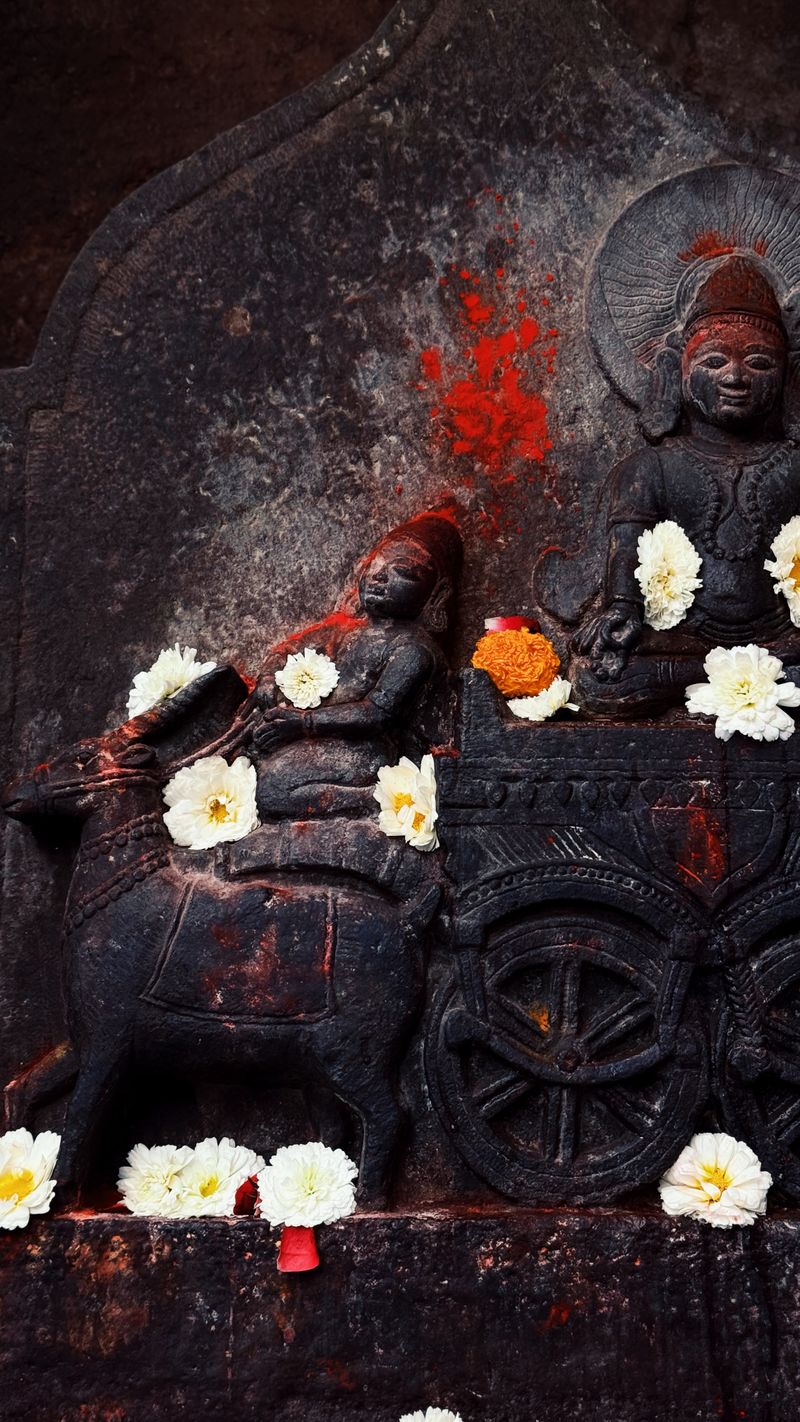
Imagine standing before an ancient deity, the air thick with centuries of devotion, a place where cosmic time itself is said to align. This isn't just a story; it's the reality of the Mahakaleshwar Temple in Ujjain, a sacred site that draws millions seeking divine connection and astrological grace. Ujjain, itself a city steeped in Jyotish lore as the prime meridian, hosts this magnificent dwelling of Lord Shiva, a place where the eternal merges with the temporal.
The Whispers of Ancient Origins
The legend of Mahakaleshwar is as profound as the deity it enshries. It's said that a Brahmin boy named Vatsa, devoutly praying to Shiva, found himself surrounded by invaders. Shiva, witnessing this devotion and the ensuing crisis, manifested as Mahakaleshwar, protecting his devotee and establishing his divine presence there. While the exact date of its original construction is lost to antiquity, the temple has been rebuilt and expanded over centuries by various rulers, each adding to its magnificent grandeur and spiritual significance.
This ancient lineage makes Mahakaleshwar more than just a temple; it's a living testament to faith enduring through the ages, a beacon for those seeking solace and divine intervention.
Lord Shiva: The Great Timeless One
Mahakaleshwar, as the name suggests, embodies Shiva as the 'Lord of Time' – Mahakal. This form of Shiva is considered the destroyer of time and illusion, and also the controller of it. In Hindu mythology, Shiva is part of the divine trinity, responsible for destruction and transformation, paving the way for new creation. He represents the cyclical nature of existence, the universe's constant dance of birth, death, and rebirth.
His presence at Mahakaleshwar signifies his ultimate control over Kala (time), offering devotees a chance to transcend mortal limitations and connect with the eternal. This understanding of Shiva as the master of time is crucial for appreciating the temple's unique astrological significance.
An Architectural Marvel of Divine Proportion
The Mahakaleshwar Temple stands as a breathtaking example of traditional Indian temple architecture, though its exact stylistic origins are debated due to extensive renovations. It features a complex layout with multiple levels, including an underground sanctum where the Mahakal idol resides, a feature rarely seen in Jyotirlinga temples.
What truly sets it apart is its unique south-facing sanctum (Dakshinamurti), a characteristic not found in any other of the twelve Jyotirlingas. This orientation is considered highly auspicious, representing Shiva's teachings and his command over the southern direction, often associated with Yama, the god of death, thus symbolizing his victory over mortality. While not a UNESCO World Heritage site itself, Ujjain's historical and religious importance is undeniable, making the temple a cornerstone of India's cultural heritage.
Jyotish and the Infinite Light of Shiva
The concept of Jyotirlingas is central to understanding the astrological power of Mahakaleshwar. These are not just temples but points where Shiva's infinite, formless light manifested itself. Mahakaleshwar, as the south-facing Jyotirlinga, holds a special place. Ujjain's historical significance as the prime meridian in ancient Indian astronomy and geography adds another layer.
Astrologically, visiting Mahakaleshwar during specific planetary transits can be incredibly transformative. Periods when Saturn (Shani) transits through the 8th or 12th house from your Janma Lagna, or when Mars (Mangal) is in challenging aspects, can bring significant life challenges. A pilgrimage during such times, especially when accompanied by a strong Jupiter (Guru) aspect or a favorable Mahadasha, can help mitigate negative energies and invoke Shiva's protective blessings.
When Does the Cosmos Align for Mahakaleshwar?
The planetary configurations that make a visit to Mahakaleshwar particularly potent often revolve around Saturn and Rahu. When Saturn is in transit through the seventh house from your Moon sign, or during Sade Sati, devotees often feel a pull towards this powerful deity to seek relief and stability. Similarly, if Rahu is afflicting your Lagna or Moon, or if you are undergoing a Rahu Mahadasha, the protective and transformative energies of Mahakal can be profoundly beneficial.
These transits can be challenging, often bringing introspection, karma, and significant life changes. Mahakaleshwar, as the master of time and destroyer of illusions, offers a sanctuary and a guiding light through these periods, helping devotees navigate their astrological karmas with strength and wisdom.
Festivals and Sacred Journeys
The most auspicious time to visit Mahakaleshwar is during the month of Shravana (July-August), dedicated to Lord Shiva, when the temple buzzes with intense devotional energy. The Mahashivratri festival, celebrated in February-March, is another peak time, drawing devotees from across the globe for its grand celebrations. The famous Ujjain Kumbh Mela, held every 12 years, is a period of unparalleled spiritual significance, where the confluence of cosmic energies is at its absolute peak.
Beyond these major events, any time you feel a strong calling from Lord Shiva or are navigating a significant astrological transit is a good time for a pilgrimage. The spiritual vibrations of the temple are ever-present, ready to envelop those who arrive with a sincere heart and seeking spirit.
Your Practical Pilgrimage Guide
Reaching Ujjain is straightforward. The nearest airport is Devi Ahilyabai Holkar Airport (IDR) in Indore, about 55 kilometers away, from where you can take a taxi or bus. Ujjain is also well-connected by rail to major cities across India. The best season to visit is during the cooler months, from October to March, avoiding the intense summer heat and monsoon rains.
For temple visits, a modest dress code is expected, covering shoulders and knees. Men can wear dhotis or pyjamas and kurtas, while women are usually seen in sarees or salwar kameez. Darshan timings vary, but the Bhasma Aarti, a unique and powerful ritual involving offering ash to the deity at dawn, requires advance booking and a specific dress code for participants.
Vedic Remedies at the Heart of Time
Devotees flock to Mahakaleshwar seeking solutions to various life challenges, from career obstacles and financial woes to marital discord and health issues. The presiding deity, Mahakal, is believed to have the power to alleviate suffering and grant blessings. Specific pujas like the Mahamrityunjaya Jaap and the Bhasma Aarti are considered highly potent for overcoming fears, diseases, and negative karmic influences.
Chanting the mantra "Om Namah Shivaya" with sincere devotion at the temple amplifies its effects. The unique south-facing orientation and the deity's mastery over time make this Jyotirlinga especially powerful for resolving ancestral karma and achieving liberation from the cycle of birth and death.
One Thing You Can Do Today: Reflect on a challenge you're facing that feels tied to time or destiny. If you feel a calling, research the Bhasma Aarti booking process for a future pilgrimage.
Comments
🔮 Join the conversation — share your thoughts on this article
Login to Comment →