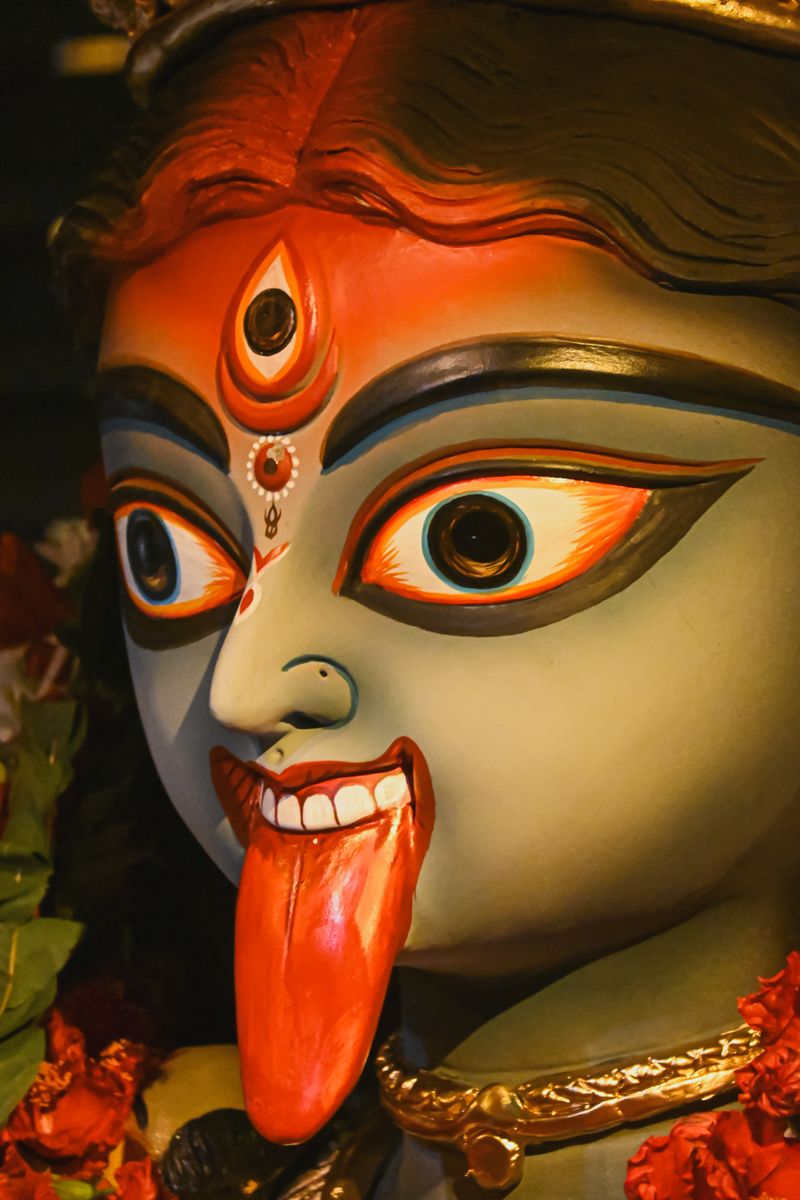
Step into the spiritual heart of Kolkata, where the divine feminine energy of Goddess Kali pulses with an intensity felt across the globe. The Kalighat Kali Temple is more than just a pilgrimage site; it's a cosmic nexus, a place where the fierce and the benevolent merge to offer profound transformation.
The Legend of Sati's Fall
The very earth of Kalighat is steeped in divine myth. It's believed that when Goddess Sati, wife of Lord Shiva, immolated herself, her body was dismembered into 51 parts by Shiva's sorrowful dance, the Tandava. Lord Vishnu, with his Sudarshan Chakra, then scattered these pieces across the Indian subcontinent.
The sacred site of Kalighat is where Sati's right toe is said to have fallen. This celestial event sanctified the land, making it one of the most revered Shakti Peethas, potent centres of divine feminine power.
Who is the Fierce Goddess Kali
Goddess Kali, often depicted with a fearsome visage, is not just a deity of destruction; she is the ultimate liberator. In Hindu tradition, she represents the primal force of change, the destroyer of ignorance, ego, and negative forces that bind us.
Her dark complexion symbolizes the formless, the all-pervading. The garland of skulls signifies her victory over death and the ego's transience, while her four arms represent her boundless power and her blessings. She is the fierce mother who fiercely protects her devotees from all that hinders their spiritual progress.
A Temple Born of Divine Mandate
The current structure of the Kalighat temple, while appearing relatively modern, stands on ancient, sacred ground. The temple's history is intertwined with the miraculous discovery of the idol of Goddess Kali in the Bhagirathi River centuries ago by a devotee named Govinda Sarkar.
Later, in the early 19th century, the temple was rebuilt by the Sabarna Roy Chowdhury family of Uttarpara. Despite its architectural style, which may seem less ornate than some older temples, its power lies in the very soil and the divine presence it enshrines.
The Astrological Secrets of Kalighat
As a powerful Shakti Peetha, Kalighat holds immense astrological significance. The presence of Goddess Kali, the Ugra (fierce) form, is particularly potent for those influenced by Saturn (Shani) and Ketu.
These celestial bodies, often associated with hardship, detachment, and spiritual awakening, find solace and strength under Kali's gaze. Devotees with challenging Shani or Ketu placements in their birth charts often experience profound relief and accelerated spiritual growth by connecting with the deity here.
When Should You Seek Her Grace?
Your astrological chart can reveal opportune times for a visit. Periods of Saturn's Sade Sati or Dhaiya, or whenever Ketu is strongly influencing your horoscope, can make a pilgrimage to Kalighat especially powerful. These are times when Kali's energy can help you navigate challenges and break free from karmic entanglements.
Even outside of specific astrological afflictions, visiting during the Navaratri festival or on Amavasya (New Moon) nights can amplify the spiritual energy. These are periods when the veil between the material and spiritual worlds is thinnest, allowing for a deeper connection.
Experiencing the Sacred Rhythms
Kalighat is alive with devotion throughout the year, but certain times offer a heightened spiritual experience. The grand festivals of Kali Puja (usually celebrated in October or November) and Durga Puja (September or October) draw immense crowds and vibrant energy.
For a more tranquil yet deeply spiritual experience, consider visiting during the cooler months, from October to March. The weather is pleasant, allowing for longer periods of introspection and participation in the temple's daily rituals.
Your Journey to the Divine Mother
Reaching Kalighat is straightforward. The nearest major city is Kolkata, West Bengal. Netaji Subhas Chandra Bose International Airport (CCU) is Kolkata's main airport, from where you can take a taxi or pre-paid cab to Kalighat.
The best season to visit is typically from October to March for pleasant weather. As a place of worship, modest attire is expected. Dress comfortably yet conservatively, covering your shoulders and knees. Temple timings for darshan (viewing the deity) are generally from early morning (around 5:00 AM) to late at night (around 10:00 PM or 11:00 PM), but it's always wise to check for any recent changes.
Vedic Solutions from the Mother Goddess
Devotees flock to Kalighat seeking solutions to a myriad of life's challenges. The temple offers various pujas and homas (fire rituals) tailored to specific needs, such as warding off negative energies, overcoming obstacles, or seeking blessings for career and family.
Chanting Kali Mantras like "Om Kreem Kreem Kreem Hreem Hreem Hreem" or the powerful "Om Kapalinyai Vidmahe, Smashana Vasinyai Dhimahi, Tanno Kali Prachodayat" can be deeply transformative. Many come seeking liberation from debt, chronic illness, or karmic blockages, finding solace and strength in Kali's embrace.
One Thing You Can Do Today:
Spend a few moments meditating on the image of Goddess Kali. Visualize her fierce yet loving gaze, and silently offer your ego at her feet.
Comments
🔮 Join the conversation — share your thoughts on this article
Login to Comment →