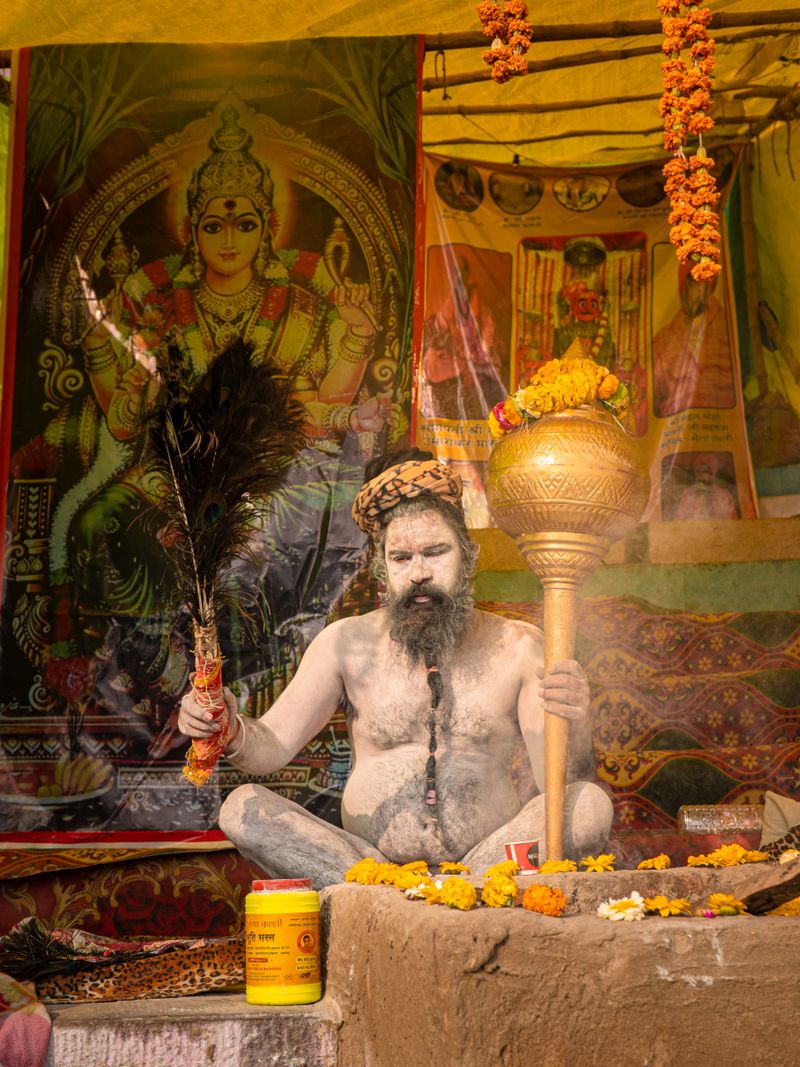
When you bow before your Guru on Guru Purnima, you're not simply showing respect to a person—you're acknowledging the divine wisdom that flows through them to transform your life. This full moon day dedicated to teachers and spiritual guides is among the most powerful moments in the Hindu calendar to deepen your spiritual practice and invite blessings of knowledge and enlightenment into your home. Whether your Guru is your Vedic astrologer, yoga teacher, spiritual master, or life mentor, this puja creates a sacred bridge between student and teacher.
What You Need (Puja Samagri)
Gather these items before you begin your Guru Purnima puja:
- Kalash (sacred copper or brass pot) filled with pure water
- Besan or rice flour (for drawing rangoli)
- Sandalwood paste [Chandan] (cooling, purifying fragrance)
- Flowers — yellow, white, or orange marigolds and jasmine
- Incense sticks [Agarbatti] — preferably sandalwood or jasmine
- Ghee (clarified butter) and cotton wicks for the lamp [Diya]
- Fruits — bananas, oranges, or coconut (symbolizing abundance)
- Betel leaves and areca nut [Paan samagri] (traditional offering)
- Turmeric powder [Haldi] and vermilion [Sindoor]
- Honey and milk (for naivedya, ritual food offering)
- Bell [Ghanti] for invoking sacred space
- White cloth for draping the altar
Step-by-Step Puja Vidhi
Follow these steps to honor your Guru with reverence and sincerity:
1. Purify Your Space
Begin by sweeping your puja room or altar area clean. Sprinkle water infused with a few drops of rose water around the space to purify it energetically. This prepares the environment to receive divine blessings.
2. Create Your Altar
Place the Kalash in the center of your altar, facing east or north. Arrange flowers around it, and position a photo of your Guru (or the Guru principle itself) behind the pot. Drape white cloth to frame the sacred space.
3. Draw the Rangoli
Using rice flour mixed with water, create a simple rangoli design around the Kalash. Add patterns using turmeric powder and vermilion to honor the Guru with colorful, artistic devotion.
4. Light the Lamp
Fill the Diya with ghee, place a cotton wick inside, and light it while chanting "Om Namah Shivaya." This represents the illumination of knowledge your Guru brings into your life.
5. Ring the Bell
Ring the Ghanti three times slowly and intentionally. This sacred sound calls the Guru's blessings and marks the formal beginning of your puja.
6. Apply Sandalwood Paste
Apply Chandan to your forehead in a vertical line (Tilak). Then apply it to the Kalash and offer some to your Guru's photograph as a cooling, purifying gesture.
7. Offer Flowers and Prayers
Place marigold and jasmine flowers at the Guru's feet or photo while reciting the Guru Gayatri Mantra: "Om Gurubhyo Namah" (salutations to the Guru). Repeat this 108 times if possible, using a mala (prayer beads) to keep count.
8. Present the Betel Leaves
Offer betel leaves and areca nut to honor the Guru's presence. These symbolize respect in traditional Hindu culture and mark the transition from worldly concerns to spiritual focus.
9. Offer Fruits and Sweets
Present fresh fruits and sweets (Naivedya) as gratitude offerings. These represent the sweetness of knowledge and the fruits of discipleship. You may also offer milk and honey mixed together—a nectar symbolizing the Guru's teachings.
10. Chant Sacred Mantras
Recite the Guru Mantra or Guru Stotram (hymn of praise) for at least 11 minutes. Popular choices include the Dattatreya Guru Stotram or simple Sanskrit verses honoring your teacher.
11. Perform Guru Paduka Puja
If possible, touch your Guru's feet (or their photograph) respectfully and circle your hands around them. This gesture, called Paduka Puja, symbolizes complete surrender and faith.
12. Conclude with Aarti
Wave the lit lamp in circular motions before the altar while singing devotional songs. This final gesture of gratitude seals the sacred ritual and invites lasting blessings.
Best Time (Shubh Muhurta)
Guru Purnima falls on the full moon day [Purnima Tithi] in the lunar month of Ashadh (June-July). To find the exact auspicious moment for your puja, consult the Muhurta Calculator for your location. Generally, perform the puja during Brahma Muhurta (45 minutes before sunrise) or in the evening when the moon is visible.
For deeper insight into how the planetary positions influence your spiritual practice, check your Daily Vedic Horoscope on this sacred day. If you haven't yet mapped your spiritual journey, Generate Your Kundali to understand your natal chart's connection to Guru principles and wisdom planets like Jupiter.
Significance and Benefits
In Vedic philosophy, the Guru is not merely a teacher but a spiritual catalyst—someone who illuminates the path from darkness (Gu) to light (Ru). When you perform this puja with sincere devotion, you:
- Strengthen your bond with your spiritual guide and receive their blessings consciously
- Activate the wisdom planet Jupiter in your life, enhancing learning and growth
- Release karmic blocks that prevent you from receiving knowledge
- Align yourself with the lineage of teachers stretching back to the ancient Rishis
- Develop humility, gratitude, and receptivity—essential qualities for true growth
Common Mistakes to Avoid
- Performing puja without clean hands and body — Always bathe and wear clean clothes before starting
- Neglecting to set intention — Spend 2-3 minutes mentally clarifying why you're honoring your Guru before beginning
- Offering stale or damaged flowers — Use only fresh, fragrant flowers; they represent your pure devotion
- Rushing through the mantras — Chant slowly and with full awareness; one sincere repetition outweighs a hundred careless ones
- Forgetting gratitude — End your puja by genuinely thanking your Guru for all they've taught you, even the difficult lessons
FAQ
Q: Can I perform this puja if I don't have a living Guru?
A: Absolutely. You can honor the Guru principle itself—the universal teacher present in all wisdom traditions. You may also invite the blessings of Dattatreya (the Adi Guru), Lord Shiva (the ultimate teacher), or Saraswati (goddess of knowledge). Your sincere intention matters most.
Q: What should I do with the flowers and food offerings after the puja?
A: The flowers and food become blessed (Prasad). Distribute the fruits and sweets among family members and friends, and keep some flowers to place in a sacred space. This spreads the blessings beyond your immediate puja.
Q: Is Guru Purnima only for Hindu devotees?
A: While rooted in Hindu and Buddhist traditions, Guru Purnima celebrates the universal principle of teaching and learning. Anyone seeking to honor their mentor or spiritual guide can perform this puja with sincere respect.
This Guru Purnima, take time to truly recognize the invisible threads of wisdom that connect you to all your teachers. Your gratitude and devotion today plant seeds of continued growth, learning, and spiritual transformation that will blossom throughout your life.
Comments
🔮 Join the conversation — share your thoughts on this article
Login to Comment →