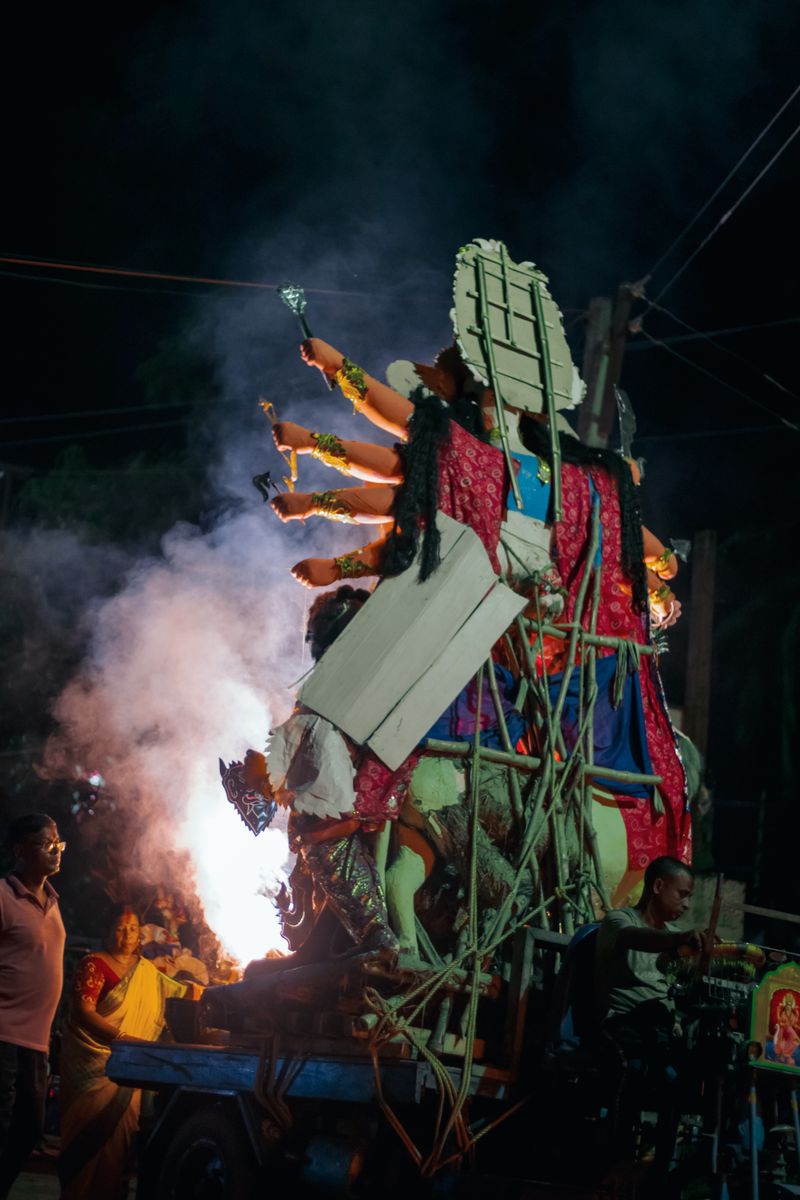
On the tenth day of Navratri, when Goddess Durga's final victory over the demon Mahishasura is celebrated, millions of devotees across India perform sacred rituals to invite divine protection and triumph over their personal struggles. This auspicious occasion, called Vijayadashami (the day of victory), marks not just a mythological triumph but a profound spiritual turning point in your own journey toward transformation. When you align yourself with this powerful cosmic energy through proper puja, you invite the blessing of overcoming obstacles, fear, and negativity that may be blocking your path to success.
What You Need (Puja Samagri)
To perform Dussehra Vijayadashami Puja with complete reverence, gather these sacred items:
- Kalash (sacred copper or brass pot) filled with soil
- Barley seeds (Jau) for sprouting
- Flowers — marigold, lotus, and rose petals
- Dhoop and Agarbatti (incense sticks and fragrant smoke)
- Ganesha idol or image (to invoke the remover of obstacles)
- Durga Mata idol or image (the divine feminine power)
- Red cloth or silk to drape the altar
- Ghee (clarified butter) for the lamp (Diya)
- New cotton wicks (Batti) for the lamp
- Offerings — fruits (banana, coconut, apple), dry fruits, and jaggery
- Holy ash (Vibhuti) or vermillion (Sindoor)
- Panchamrit (mixture of milk, yogurt, honey, ghee, and sugar)
- Bell (Ghanti) for invoking the divine
Step-by-Step Puja Vidhi
Step 1: Begin early in the morning (ideally during Brahma Muhurta, between 4:00 AM and 6:00 AM) after bathing and wearing clean, preferably new clothes—white or red are especially auspicious for this observance.
Step 2: Set up your altar by spreading the red cloth and placing the Kalash in the center. Fill it with soil and plant the barley seeds, which represent the sprouting of new beginnings and prosperity (these will be distributed on Dussehra as Prasad).
Step 3: Place the Ganesha idol to the left side of the Kalash. Light incense and offer flowers while chanting "Om Gam Ganapataye Namah" three times to remove all obstacles from your puja.
Step 4: Now position the Durga Mata image in the center. Pour water from a vessel while ringing the bell softly—this represents purification of the space and your intentions.
Step 5: Offer the Panchamrit to the Durga Mata image by applying it gently with a spoon or Chandan (sandalwood paste). As you do this, mentally surrender your fears, doubts, and the ego-driven desires that keep you bound.
Step 6: Light the Diya (lamp) using the new cotton wicks and ghee. This lamp represents the eternal flame of knowledge and divine consciousness dispelling the darkness of ignorance within you.
Step 7: Offer flowers and leaves at the feet of Durga Mata while chanting the Durga Saptashati (or at least the Devi Mahatmya verses if you know them). If this feels overwhelming, sincere devotion and simple prayers are equally powerful.
Step 8: Place your offerings—fruits, dry fruits, and jaggery—on the altar. These symbolize the fruits of your righteous actions and the sweetness you wish to share with the world.
Step 9: Sit in a meditative posture (Padmasana or Sukhasana) and visualize Durga Mata standing victorious over the demon Mahishasura. See her radiant form filling your being with courage, wisdom, and unshakeable inner strength.
Step 10: Perform Aarti by moving the lamp in circular motions in front of the deity, offering your complete surrender. Chant "Jai Mata Di" or any Durga Mantra that resonates with your heart.
Step 11: Distribute the Prasad (blessed offering) to family members and visitors, and consume it yourself with gratitude. Keep the sprouted barley to give away or wear as a blessing.
Step 12: Prostrate fully before the deity, touching your forehead to the ground, symbolizing complete ego dissolution and acceptance of divine will.
Best Time (Shubh Muhurta)
Vijayadashami falls on the 10th day of the Shukla Paksha (waxing moon) in the month of Ashwin (September-October). Check your Panchang to confirm the exact tithi, as this varies each year. The most auspicious times are during Brahma Muhurta (early morning) or during the Abhijit Muhurta if it falls on that day. To ensure you're performing the puja at the most beneficial moment for your unique birth chart and planetary influences, consult the Muhurta Calculator. If you want deeper insight into how this festival's cosmic energy affects you personally, generate your Kundali to understand your birth chart's relationship with this sacred occasion.
Significance and Benefits
The Dussehra Vijayadashami Puja represents the ultimate victory of light over darkness, truth over falsehood, and the divine feminine principle (Shakti) over ego and ignorance. When you perform this puja with sincerity, you're not merely remembering a mythological event—you're activating the same divine power within yourself that Durga embodied.
The barley seeds sprouted during this puja symbolize the germination of new possibilities in your life. By the time you harvest and distribute them, you've completed a full cycle of growth and transformation. Spiritually, this puja dissolves karmic blockages, boosts your confidence, protects you from negative influences, and invites prosperity into your home. Many devotees report feeling a surge of courage and clarity in tackling long-standing problems after observing this ritual sincerely.
Common Mistakes to Avoid
- Performing the puja in haste: Durga Mata values devotion over perfection. A slow, heartfelt puja without fancy mantras is far more powerful than a rushed, elaborate one.
- Using stale or impure ingredients: Ensure all offerings are fresh and prepared with a clean heart. Spoiled fruit or flowers carry negative vibrations.
- Lighting the lamp with matches alone: Traditionally, the lamp should be lit from an existing sacred flame if possible, symbolizing the continuity of divine light.
- Neglecting the meditative component: Simply going through the motions without inner surrender weakens the puja's spiritual impact. Spend time visualizing and connecting emotionally.
- Forgetting to distribute Prasad: Sharing the blessed offering amplifies the puja's blessings and extends its protection to your loved ones.
FAQ
Q: Can I perform this puja if I'm menstruating?
A: Traditional texts have varying perspectives. Many modern spiritual teachers believe that menstruation is a natural, sacred state and doesn't bar you from ritual worship. However, some families prefer to observe the ritual after your cycle ends. Follow your heart and your family's tradition—sincere devotion is what truly matters to the Divine Mother.
Q: What if I don't have a Durga idol? Can I use a picture?
A: Absolutely. A printed image or photograph of Durga Mata is just as valid as a clay or metal idol. The Divine is not bound by form—it's your intention and devotion that creates the sacred connection. Many devotees use online images displayed on their phones or printed on paper.
Q: How long should the barley seeds be sprouted before distribution?
A: Ideally, the barley should sprout for nine to ten days (the full duration of Navratri) so that it's visibly green and vibrant by Vijayadashami. This represents the full manifestation of the Goddess's blessings through Navratri's nine forms.
When you perform the Dussehra Vijayadashami Puja with sincere devotion, you're not asking for victory over external enemies—you're invoking the grace to conquer the greatest adversary: your
Comments
🔮 Join the conversation — share your thoughts on this article
Login to Comment →